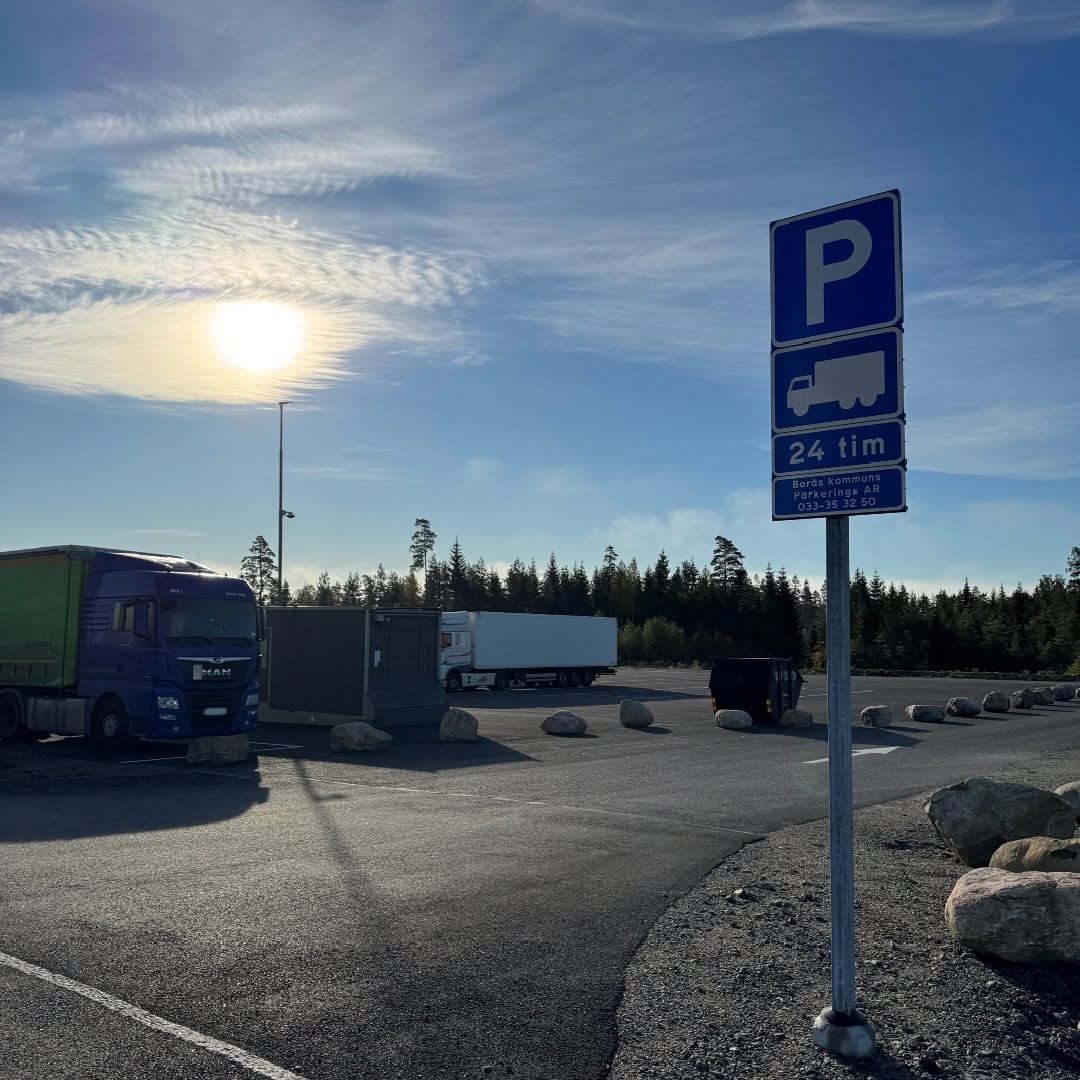
On 20 May 2026, the Swedish Transport Workers’ Union (Svenska Transportarbetareförbundet) published a new report highlighting the severe shortage of truck rest areas across Sweden. The report, titled Professional Drivers Caught Between EU Law and Swedish Reality, is based on a comprehensive survey of professional drivers.
Key Findings
- 86% of drivers believe there are not enough rest areas along the routes they regularly travel.
- 80% say they have been forced to breach EU driving and rest time regulations because suitable parking or rest areas were unavailable, with 35% reporting that this happens repeatedly.
- 57% struggle to find a rest area with working toilet facilities.
- Only 25% consider existing rest areas to be safe during evenings and at night.
- 69% of female drivers believe today’s rest areas do not adequately address the needs of women.
Report Conclusions
Amne Alansari, the report’s author and investigator for the Swedish Transport Workers’ Union, concluded:
“The report reveals serious problems. The shortage of rest areas forces many drivers to break the law simply to take their legally required breaks at an appropriate location. It is a legal paradox that EU legislation requires drivers to stop, while the lack of suitable infrastructure effectively forces them to violate those same rules.”
Union President Tommy Wreeth described the situation as unacceptable:
“It is impossible to accept that professional drivers are forced into unintentional violations of the law because of inadequate infrastructure. This is a systemic failure: society creates the problem through insufficient infrastructure and then penalises drivers for being unable to comply with the regulations.”
The Union’s Recommendations
The Swedish Transport Workers’ Union calls for a national strategy that includes:
- A comprehensive national plan for truck rest areas.
- Recognition of rest areas as critical infrastructure for both occupational health and road safety.
- Capacity planning based on actual freight traffic flows.
- Integration of security and gender equality into the design of future rest areas.
- A clear government strategy to ensure Sweden meets its obligations under EU legislation.
As Tommy Wreeth summarised:
“Rest areas are essential for professional drivers to perform their work safely and securely. Would poor lighting and broken toilets be acceptable in an office? A national strategy is needed in which the government, municipalities, and private stakeholders share responsibility for resolving today’s unacceptable situation.”